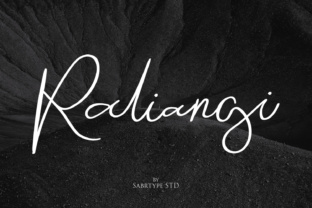
Raliangi: A Modern Script Font for Creative Projects
Raliangi is a contemporary script font designed to bring elegance and fluidity to a wide range of design applications. Its flowing, hand-drawn style makes it ideal for projects that require a personal or artistic touch. Whether you're creating a signature, designing stationery, developing a logo, or working on typography quotes, Raliangi offers a versatile solution that can elevate your visual communication.
As a modern script font, Raliangi stands out for its balance between readability and aesthetic appeal. It is particularly well-suited for use in headers, covers, and other prominent design elements where a unique visual identity is essential. However, like any typeface, it comes with its own set of strengths and limitations that should be considered when deciding whether it aligns with your creative goals.
Why Raliangi Might Interest You
If you're looking for a font that adds a sense of sophistication and individuality to your work, Raliangi could be an excellent choice. Its script style mimics the natural flow of handwriting, giving it a more organic feel compared to blocky or geometric fonts. This characteristic makes it especially appealing for branding projects, personal signatures, or any design that aims to convey a human touch.
For designers and typographers, Raliangi provides a fresh alternative to traditional script fonts. It is often used in magazine or book covers, website headers, and promotional materials where a visually striking element is needed. Its adaptability across different mediums and formats also makes it a practical option for both digital and print projects.
Benefits of Using Raliangi
One of the primary advantages of Raliangi is its ability to add personality to text without sacrificing clarity. The font's legibility at larger sizes makes it suitable for headings and titles, while its fluid lines contribute to a sense of movement and energy. This combination can make your designs more engaging and memorable.
Another benefit is its versatility. Raliangi can be used in a variety of contexts, from professional logos to casual invitations. Its modern aesthetic allows it to blend well with both minimalist and intricate design styles, making it a flexible choice for different creative needs. Additionally, its availability in multiple weights or variations can help users achieve the right tone for their specific project.
Considerations and Tradeoffs
While Raliangi is highly effective for certain applications, it may not be the best choice for all scenarios. For instance, its script style may not be as readable in small sizes or dense blocks of text. This means it is less suitable for body copy in publications or long-form content where clarity is paramount.
Designers should also consider the context in which the font will be used. In formal or corporate environments, a more structured typeface might be preferred over a script font like Raliangi. Similarly, if the goal is to create a clean, minimalistic look, the ornate details of Raliangi could be seen as distracting rather than enhancing.
Situations Where Raliangi Excels
Raliangi shines in projects that emphasize visual storytelling or emotional expression. For example, it is well-suited for wedding invitations, personal branding, or artistic typography where the font plays a central role in conveying the message. Its dynamic appearance can also enhance the impact of quotes, slogans, or taglines in marketing materials.
In digital design, Raliangi can be used effectively for website headers, social media graphics, or app interfaces that aim to stand out. Its modern script style can give a site a distinctive identity, helping it differentiate from competitors. When paired with complementary fonts or color schemes, Raliangi can become a key visual element that reinforces brand messaging.
When Alternatives May Be More Suitable
There are situations where other fonts might be more appropriate than Raliangi. For instance, if the goal is to create a professional or high-impact logo, a sans-serif or serif font could provide a stronger foundation. These types of fonts often offer greater clarity and consistency, which are important for brand recognition.
Similarly, if the project requires a more neutral or universal look, a simpler typeface might be preferable. In cases where the audience includes a broad range of readers, including those with visual impairments, a font that prioritizes legibility over stylistic flair could be a better choice. Designers should also consider the target platform—some fonts may not render consistently across all devices or software.
Practical Insights for Decision-Making
When evaluating whether Raliangi is the right choice for your project, start by defining your goals. Ask yourself: What message do I want to convey? What visual style will resonate with my audience? How does the font fit into the overall design strategy?
Testing the font in real-world scenarios can also be helpful. Experiment with different sizes, colors, and layouts to see how Raliangi performs in various contexts. If possible, compare it with similar fonts to understand how it stacks up in terms of aesthetics, usability, and versatility.
Finally, consider the technical aspects. Ensure that the font is available in the required formats and that it works seamlessly with your design tools. If you're working with a team, communicate clearly about the font's intended use to maintain consistency across all deliverables.