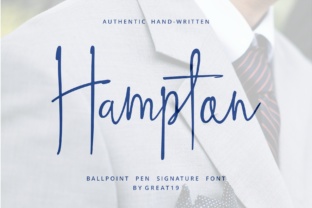
Hampton: A Signature Font for Unique Design
Hampton is a hand-written signature font that brings an authentic, sophisticated feel to any design project. Created using a 1.0 mm ballpoint pen, it captures the natural flow and texture of a real signature. This makes it ideal for projects that require a personal touch, whether in branding, publishing, or digital media.
The appeal of Hampton lies in its ability to convey authenticity and elegance without being overly formal. Its unique character sets it apart from standard fonts, making it a go-to choice for designers looking to add a distinctive flair to their work. Whether you're designing a logo, a business card, or a magazine layout, Hampton offers a fresh and professional look that stands out.
Why Choose Hampton?
Hampton is more than just a font—it's a tool for creative expression. Its hand-crafted nature gives it a warmth and individuality that digital fonts often lack. This makes it particularly effective for brands aiming to establish a personal connection with their audience. The subtle variations in each letter make every use of Hampton feel unique, reinforcing a sense of originality and craftsmanship.
For designers, Hampton provides a versatile foundation for different styles. It works well in both modern and traditional contexts, adapting to various design aesthetics. Its legibility at different sizes ensures it remains effective for both large headlines and smaller text elements. This flexibility makes it suitable for a wide range of applications, from print to web design.
Creative Applications of Hampton
One of the most common uses of Hampton is in logotypes and branding. Its signature style adds a human element to brand identity, making it perfect for businesses that want to communicate trust, creativity, or exclusivity. For example, a boutique clothing line might use Hampton in its logo to evoke a sense of artisanal quality and personal attention to detail.
Magazines and publications also benefit from Hampton’s unique aesthetic. It can be used for headlines, captions, or even as a background element to add visual interest. When paired with clean typography, it creates a balanced and sophisticated look that enhances readability while maintaining a stylish edge.
Business cards are another area where Hampton shines. A handwritten font can make a strong impression, especially when used for names, titles, or contact information. It adds a personal touch that digital fonts often miss, helping professionals stand out in a competitive market.
Adapting Hampton for Different Goals
Designers can tailor the use of Hampton to suit different audiences and platforms. For a more casual setting, such as a blog or social media profile, it can be used in a larger, bolder format to draw attention. In contrast, for a high-end fashion brand, it might be incorporated subtly into a minimalist design to maintain an air of sophistication.
When working with Hampton, it's important to consider the context in which it will be used. For instance, if the font is part of a website, ensuring that it loads quickly and displays consistently across devices is crucial. Similarly, in print materials, testing the font at different sizes and on various paper types helps maintain its intended effect.
For educators or content creators, Hampton can be a valuable tool for adding visual interest to presentations, lesson plans, or instructional materials. Its organic feel can make educational content feel more approachable and engaging, especially when used alongside other design elements like icons or illustrations.
Best Practices for Using Hampton
To get the most out of Hampton, start by understanding the message you want to convey. Is your goal to create a sense of luxury, creativity, or approachability? Choosing the right application and style will help align the font with your overall design vision.
Pairing Hampton with complementary fonts can enhance its impact. For example, using a clean sans-serif font for body text while reserving Hampton for headings or accents can create a visually appealing contrast. This approach maintains clarity while allowing the signature font to shine.
Consistency is key when using Hampton across multiple designs. Establishing a clear set of guidelines for how and where to use the font ensures a cohesive look across all materials. This is especially important for branding, where visual consistency reinforces brand recognition and trust.
Conclusion
Hampton is a powerful tool for designers and creatives seeking to add a personal, authentic touch to their work. Its hand-written style, combined with versatility and elegance, makes it suitable for a wide range of applications. Whether you're creating a logo, designing a publication, or developing a brand identity, Hampton offers a unique and sophisticated solution that stands out in a crowded design landscape.